Technical and Artistic Implementation.
2.1. Spatial Analysis
2.1.1 Selection and Architectural Documentation of the Interior Courtyard
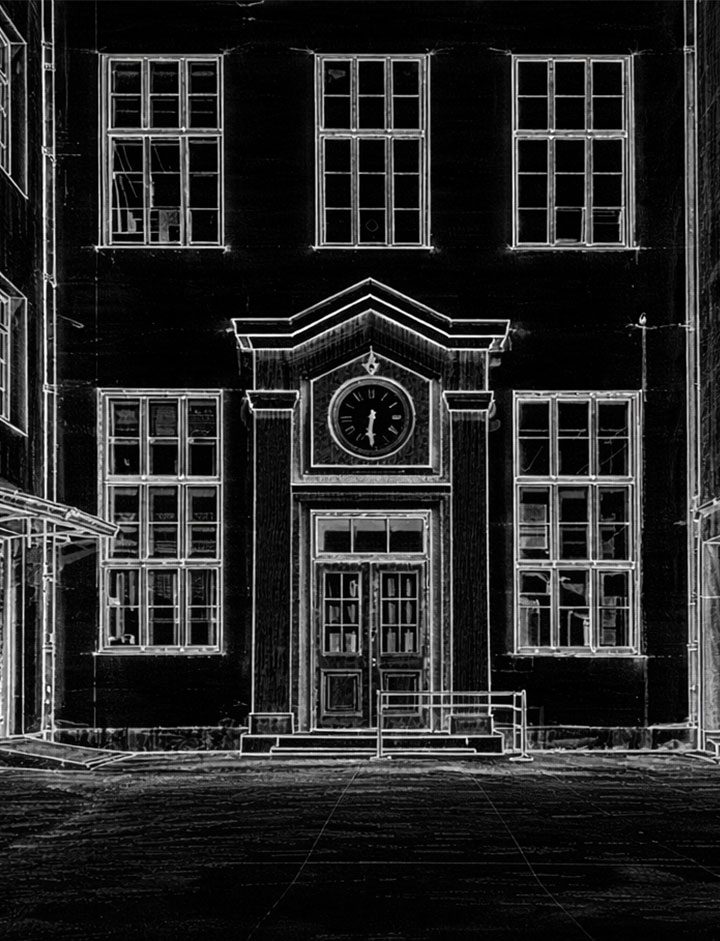
The selection of this specific interior courtyard as the application site for projection mapping was based on a combination of aesthetic, architectural, and functional criteria. The space presents strong morphological interest, as it is characterized by a symmetrical layout and clear geometric lines—features that make it ideal for the development of visual compositions.
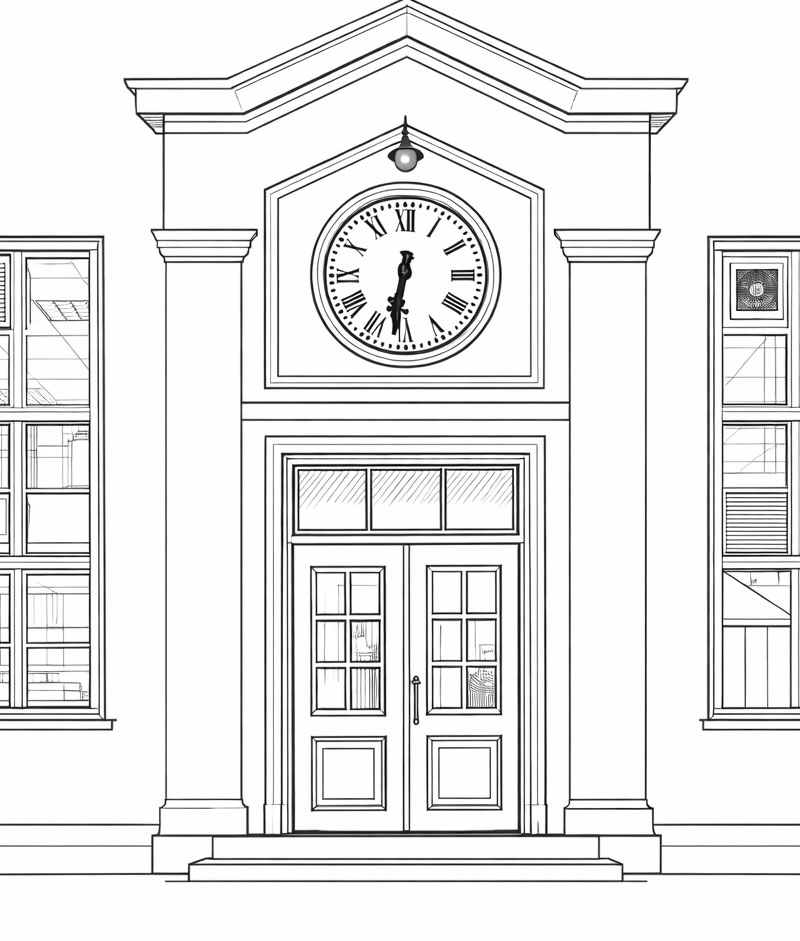
A central element of the composition is the building’s entrance, which is framed by prominent architectural features such as the pediment, the surrounding frames, and the clearly defined surface above the doorway. These elements create natural “frames,” which can be utilized as individual projection surfaces, enhancing both the structure and readability of the visual content.
The symmetry between the openings (windows) and the central axis reinforces the balance of the composition, allowing for the development of narratives based on repetition, reflection, and rhythm. At the same time, the clock located in the upper section functions as a focal point, offering the possibility of incorporating temporal or narrative symbolism into the visual scenario.
Furthermore, the materiality of the surfaces, with variations between smooth and relief elements, creates different conditions for light reflection, directly affecting the quality of the projection. Recesses, outlines, and architectural depth contribute to the creation of a three-dimensional perception, enabling the enhancement of spatial depth through digital visualization.
Overall, the space was selected because it combines clear geometry, strong architectural identity, and structural organization—characteristics that facilitate both the technical mapping process and the development of a coherent visual narrative.
2.2. Design
2.2.1 Composition Based on Typographic Elements
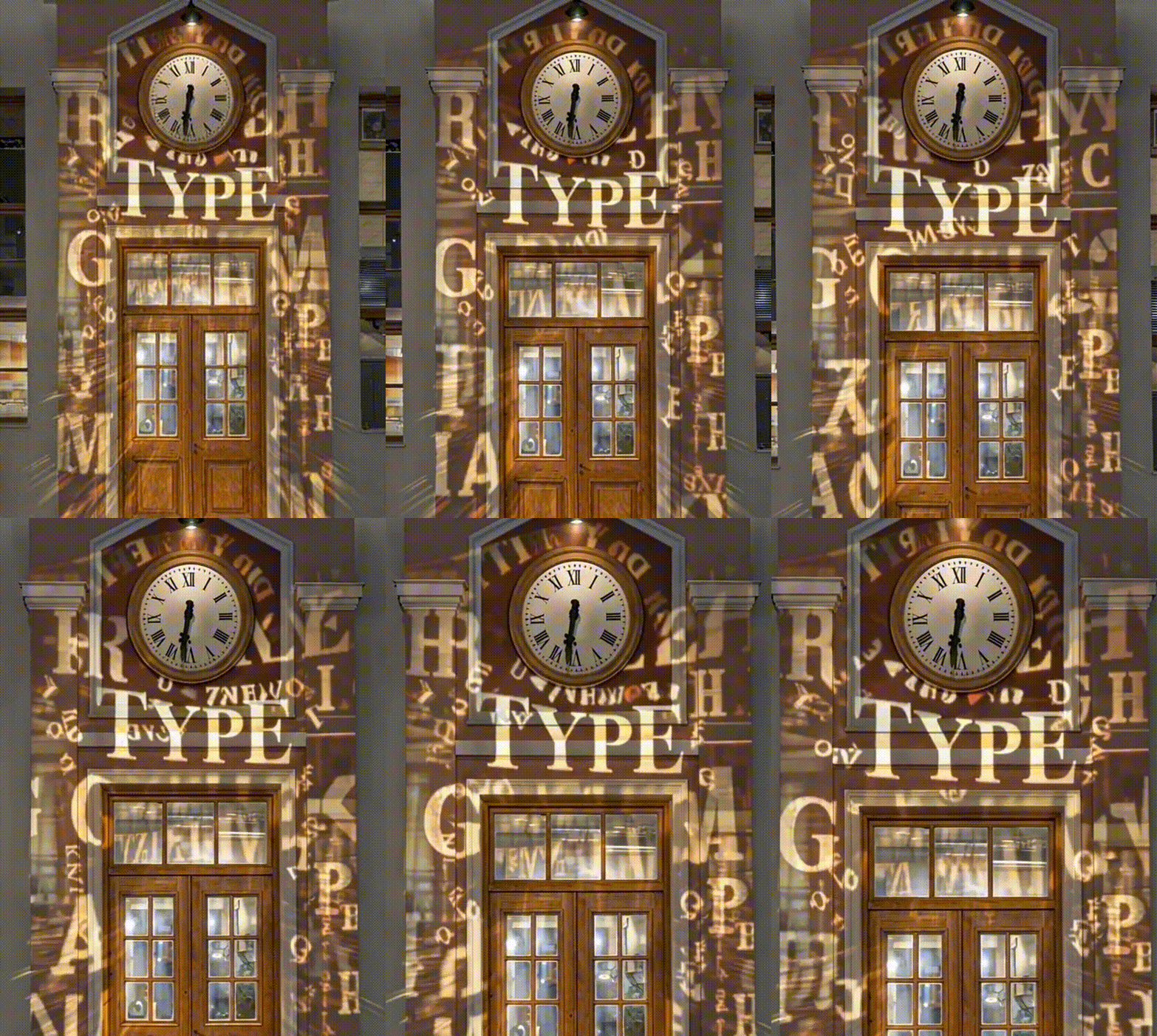
The composition draws inspiration from the history of typography, including old publications, engravings, and printing machines, highlighting textures, graphic patterns, and typographic forms. These elements were used as a basis for developing the visual narrative and for translating the concept of printing into the digital environment of projection mapping.
2.2.2 Combination of 2D Animation, 3D Compositing, and Motion Typography
A combination of 2D animation, 3D compositing, and motion typography is employed, alongside sound design elements (such as machine sounds, ink, paper, and compositional rhythms).
Motion typography is a visual communication technique in which typography acquires movement and is integrated into dynamic compositions. Through motion, letters and words cease to function solely as carriers of information and are transformed into narrative and visual elements.
Within the context of this project, motion typography is utilized as a means of connecting the history of typography with contemporary digital projection, representing processes such as printing, repetition, and layering of printed material through animated graphics.